FACES
The flat surfaces
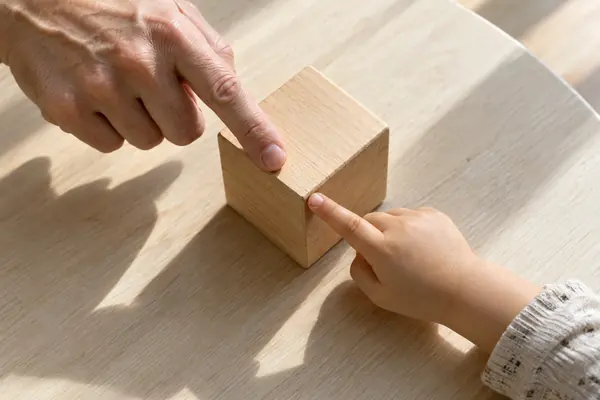
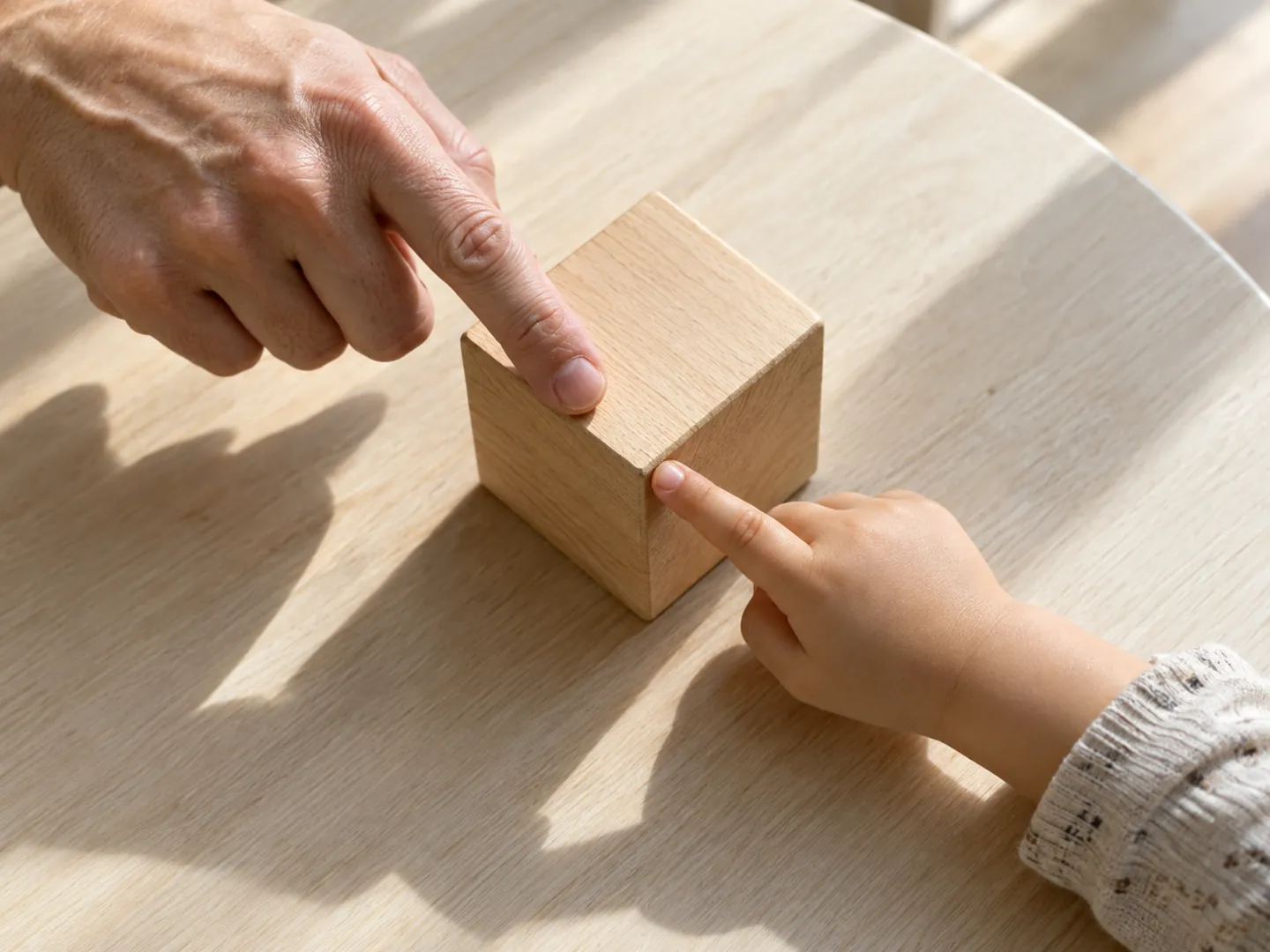
A polyhedron is a solid whose surface is made of flat faces. A cube has 6 of them, each one a square.
Try a shape doodleshapes
SHAPES, IN PLAIN ENGLISH
Every solid shape has faces, edges and vertices.
Try a shape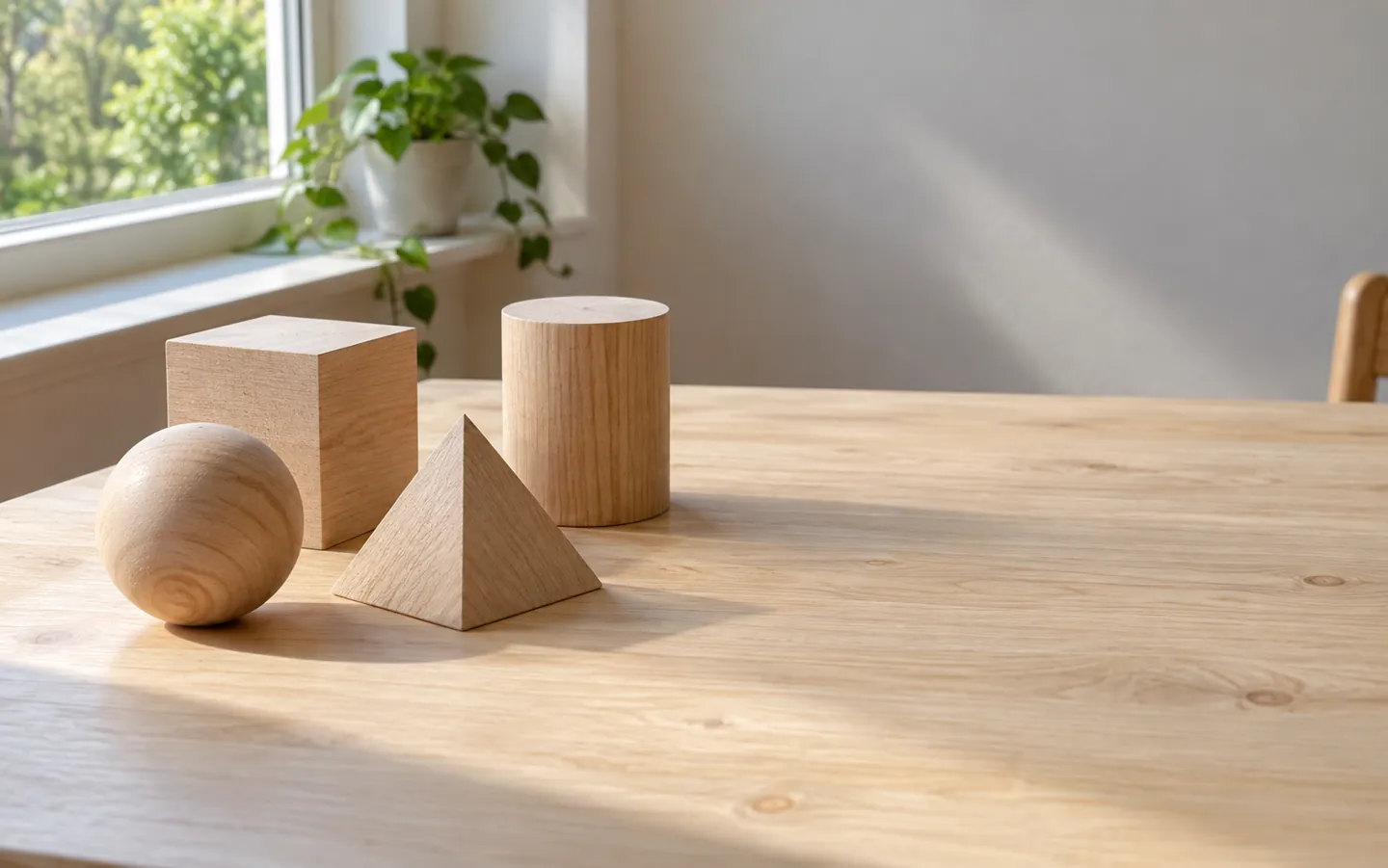
V − E + Falways 2 for a polyhedron
In England, children start naming 2D and 3D shapes in Year 1 and are counting edges, vertices and faces by Year 2. Count all three on almost any box-like solid and they fit one tidy rule.
At a glance
5 solids
Solids made of identical regular faces
The tetrahedron, cube, octahedron, dodecahedron and icosahedron. Their faces number 4, 6, 8, 12 and 20.
PLATONIC SOLIDS · PLUS MAGAZINE
≈ 40,000 columns
Interlocking basalt columns
Nearly 40,000 columns, some as tall as 36 feet, formed as lava from an eruption around 60 million years ago cooled, shrank and cracked.
GIANT'S CAUSEWAY · APS
TWO NUMBERS WORTH KNOWING
One number from geometry,
one from a coastline in Northern Ireland.
Research reported by the American Physical Society found the columns are not quite as perfectly hexagonal as once believed: the crack network evolves into an almost hexagonal pattern.
A QUICK SHAPE CHECK
Choose a shape to see its vertices (V), edges (E) and faces (F). The bar shows how many faces it has to count.
Euler's formula says V − E + F = 2 for these solids. A shape with a hole through it follows a different total.
THE SHORT ANSWER
Faces, edges and vertices.
Learn them once, use them on every solid.
FACES
A polyhedron is a solid whose surface is made of flat faces. A cube has 6 of them, each one a square.
Try a shapeEDGES AND VERTICES
The sides of the faces are the edges; the corners are the vertices. Year 2 pupils in England learn to count both.
Count at homeIN NATURE
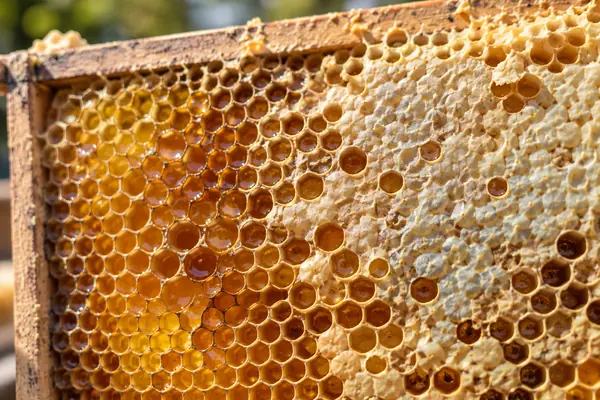
Honeycomb cells and the basalt columns of the Giant's Causeway both come out close to hexagonal.
Why hexagons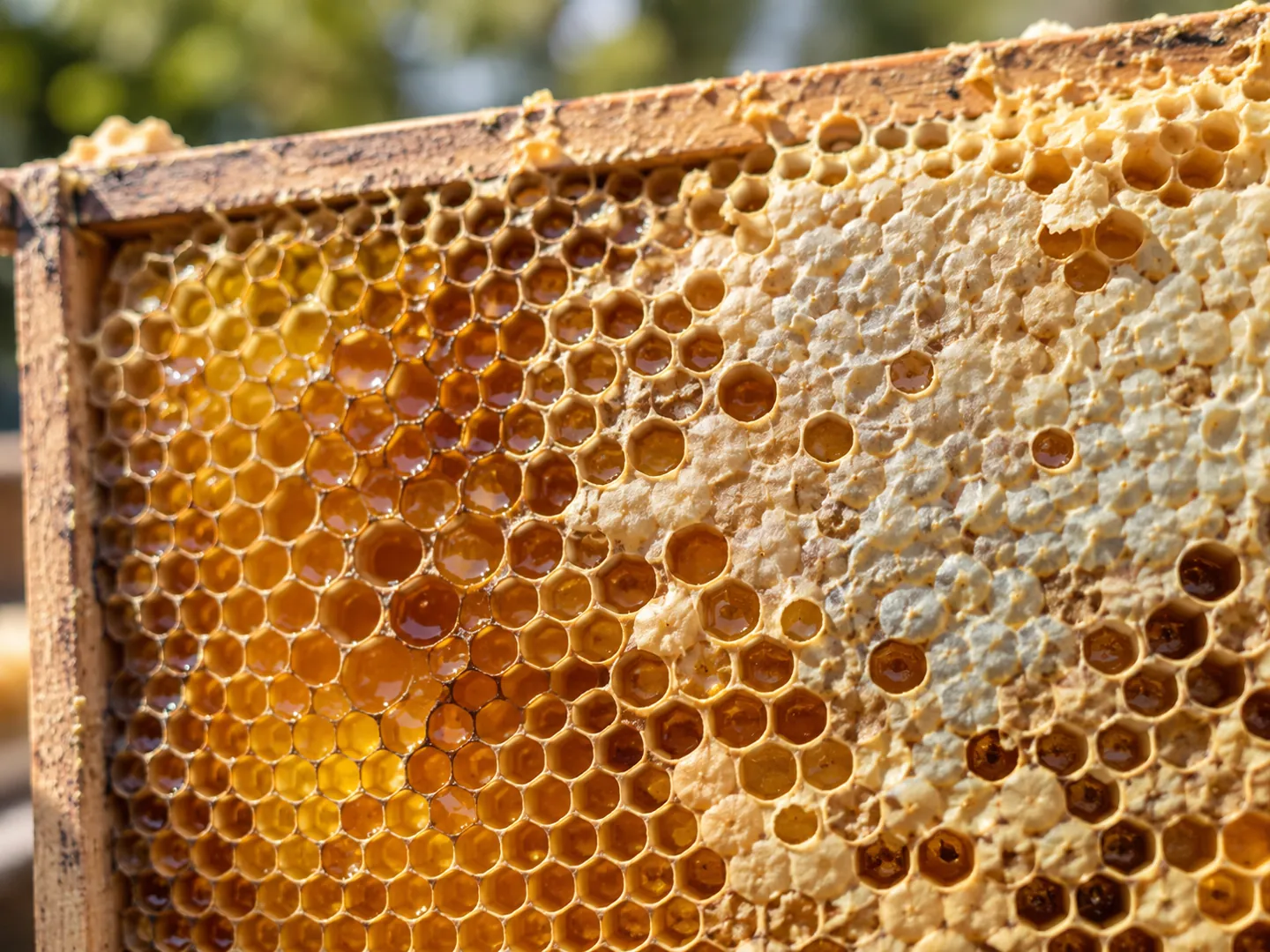
FOUR THINGS TO TRY
None of these needs special kit. Boxes, tins, dice and balls cover most of the 3D shapes children meet in primary school.
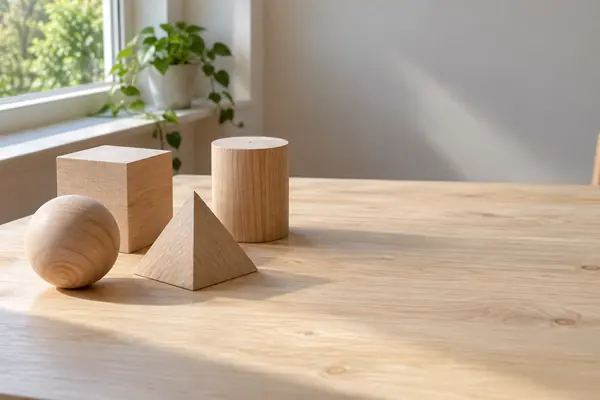
Find a cuboid, a cylinder and a sphere in the kitchen. Naming common 2D and 3D shapes is Year 1 work.
Mark each corner with a sticker as you count, so no vertex is counted twice. Then count edges and faces.
Work out vertices minus edges plus faces. For a box, 8 − 12 + 6 gives 2.
Open a cereal box out flat to see the 2D shapes it is made from. Making nets is in the Year 6 curriculum.
WHY HEXAGONS
If you split a flat surface into equal areas, the regular hexagon pattern of a honeycomb uses the least total perimeter. Pappus discussed the problem, and it was long known as the honeycomb conjecture.
Mathematician Thomas Hales set out the first general proof in 1999. On the Giant's Causeway, cooling lava cracked into a pattern that also tends towards hexagons.
Questions
On a solid made of flat faces, the edges are the sides of those faces and the vertices are the corners where they meet. A cube has 12 edges and 8 vertices.
For a polyhedron, the number of vertices minus edges plus faces equals 2. It is named after the Swiss mathematician Leonhard Euler (1707 to 1783), though he was not the first to give a complete proof.
In England's national curriculum, pupils name common 2D and 3D shapes in Year 1 and describe 3D shapes by their edges, vertices and faces in Year 2.
The five solids whose faces are identical regular shapes: the tetrahedron, cube, octahedron, dodecahedron and icosahedron.
A regular hexagon grid divides a surface into equal areas using the least perimeter, an idea known as the honeycomb conjecture. Thomas Hales gave the first general proof in 1999.
Sources
ABOUT THIS NAME
doodleshapes.com is part of the DoodleSale portfolio. It isn't in an auction right now, but you can ask about leasing it.